About Lost Spaces
This research will seek to explore the meanings of past places and spaces of emancipatory adult education in the UK, and particularly adult residential education which was especially significant as it is estimated that thirty-five to forty such residential colleges were created during and immediately after the Second World War, often in the former homes of the aristocracy, to meet a growing need for second chance and broad-based education for adults. The figure is imprecise due to the complex and shifting nature of these colleges which often began life as a short-term residential college and then changed purpose and focus over time. This research seeks to chart this process, the circumstances under which they have been abandoned over the last thirty years and, in particular, the last ten, how their pedagogical and subject-related innovations impacted beyond the life of the building/organisation and where these new movements migrated to upon their closure.
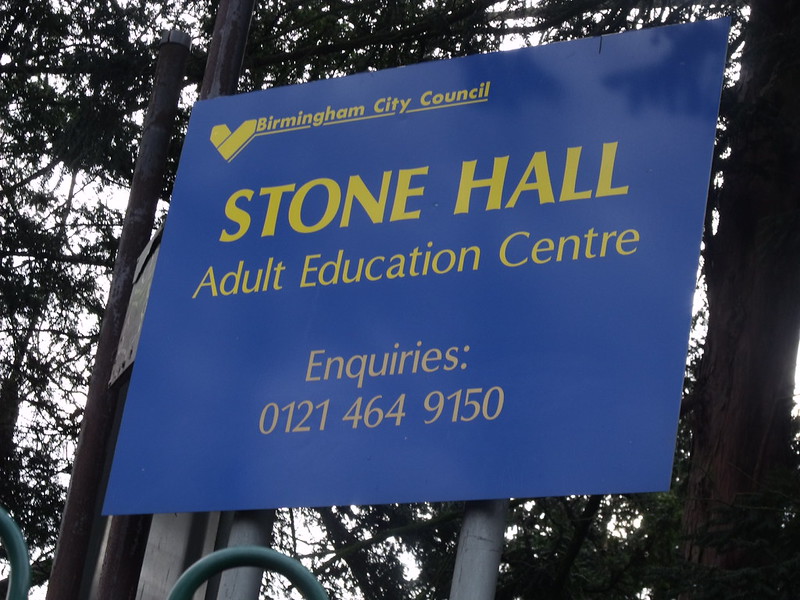 Lost spaces refer to physical sites or locations, which were used for adult education purposes in the past but are no longer in existence or have been repurposed. Nonetheless, such spaces provide a focus for the memories and experience of those who participated and benefited from such places and these spaces have stimulated developments beyond their life span (Soja, 1989, p.6). The colleges demonstrated a desire to engage local people in a whole series of new movements - variously arts and crafts, organic farming, ecology and environmental issues, industrial archaeology, sociology, psychology, youth work and child development, spiritual development, musical analysis and industrial/technological innovations in furniture making and design and mining. The courses were often experimental and pioneering in their subject areas. Some of the colleges focused on providing education within a particular religious or ethical framework; others on providing education for specific audiences, such as trade unions and the Women’s Institute, or women only education, and yet others offered a defined course content, such as preretirement courses or management training. Some acted as the residential arm of their local university, with whom they were generally in partnership. Many were supported by state funding and had strong relationships with the Local Authorities in their area. Others were led by private individuals. For many adults, the school system had failed them or had set them on a path – into technical/vocational education or, for a minority, academic education. Many felt they had been channelled in one direction, with little opportunity for broader self-development or new learning.
By 2021 almost all had closed; they have been systematically dismantled, commercialised, fallen victim to managerialism and the depredations of the market or left as empty buildings to crumble into the ground. The decline of the colleges exemplifies a radically changing conception of adult education, and of education as a whole. These lost places are significant because they showed potential for oppositional ‘social imaginaries’ of education, bringing together a range of ideas, philosophies, and pedagogical techniques, such as dialogue and critical thinking, which embody the vision of an alternative society and a genuinely progressive education system to facilitate it.
Outputs
Three online academic seminars on lost spaces in adult education will be co-ordinated for a range of academic and wider public audiences in history, education, sociology and the arts. A model similar to the Research Circle which uses dialogues between academics and practitioners will be adopted to ensure broad public engagement. The events will take place during the final three months of the research period and the findings will be incorporated into subsequent publications including two journal articles, one for the History of Education journal, one for Studies in the Education of Adults and a book proposal, which will focus on influential principals/wardens and educational leaders - as outlined in the earlier section. A conference paper will be submitted and presented to both the 2026 History of Education and Oral History conferences.
This living history archive is an output of the research based on oral history interviews (film and voice recordings) and documentary/archival research which will form part of this sustained website hosted by sharonclancy.co.uk.